
This post contains affiliate links. If you book through them, I may earn a small commission at no extra cost to you.
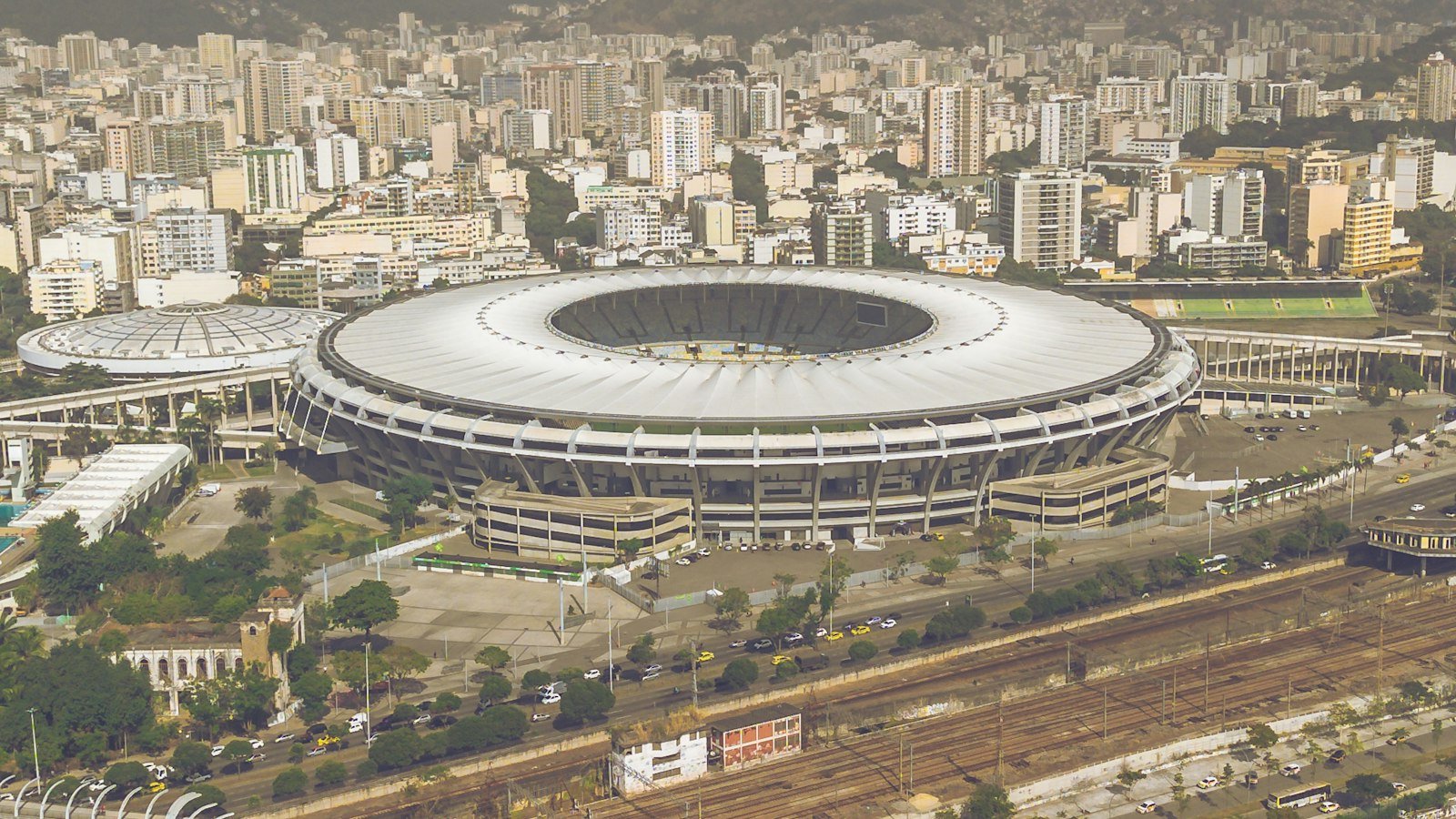
The FIFA Women’s World Cup 2027 is the first Women’s World Cup ever held in South America, and Brazil is the host. It runs from 24 June to 25 July 2027, with 32 teams playing across eight host cities, from Porto Alegre in the far south to Fortaleza in the north-east. The opening match and the final are both at the Maracanã in Rio de Janeiro.
If you’re thinking of going, this is the guide I’d want: how tickets work, which cities to base yourself in, how to get around a country this big, and what June and July are actually like in Brazil.
Ready to plan your trip?
- Find accommodation in the host cities
- Book cheap bus tickets around Brazil (5% off with code NEXTSTOP5)
- Find tours and activities in Rio de Janeiro
Skip to: Dates · Host cities · Tickets · Getting around · Where to stay · Weather · Tips
When is the Women’s World Cup 2027?
The tournament runs from Thursday 24 June to Sunday 25 July 2027. The final draw is on Friday 11 December 2026 at Rio’s Museum of Modern Art (MAM Rio). After it, FIFA will confirm which teams play in which city, and the kick-off times.
- Opening match: Maracanã, Rio de Janeiro
- Group stage: late June to early July
- Knockout rounds: July
- Final: Maracanã, Rio de Janeiro, 25 July 2027
Host cities and stadiums
| City | Stadium | Region |
|---|---|---|
| Rio de Janeiro | Maracanã | South-east |
| São Paulo | Neo Química Arena | South-east |
| Belo Horizonte | Mineirão | South-east |
| Brasília | Mané Garrincha | Centre-west |
| Salvador | Arena Fonte Nova | North-east |
| Recife | Arena Pernambuco | North-east |
| Fortaleza | Castelão | North-east |
| Porto Alegre | Beira-Rio | South |
All eight stadiums also hosted matches at the 2014 men’s World Cup.
Brazil is huge, and the distances between these cities are more like travelling between countries in Europe. Rio to Fortaleza is about 2,200 km in a straight line. If you want to follow one team, wait for the schedule before you book anything.
How to buy Women’s World Cup 2027 tickets
Tickets are sold only at FIFA.com/tickets and are charged in Brazilian reais. Sales open on Tuesday 1 December 2026 at 10am Brasília time (1pm UK, 8am US Eastern). The first window, 1–8 December, sells packages only, before the draw on 11 December:
- Brazil Team Pass: Brazil’s three group matches, from R$205 (about US$36)
- Arena Pass: every match at one stadium, up to the quarter-finals
- Flex Pass: three matches you choose, including one Brazil group match or one semi-final
Inside the packages, category 3 seats start at R$30 (about US$5) a match, far cheaper than recent men’s World Cups. Half-price tickets (meia-entrada) are mainly for Brazilian students and seniors.
- Buy only from FIFA. Resale and ticket-package sites will appear, but FIFA usually runs its own resale platform, so use that if you miss out.
- You’ll need a FIFA account. Prices are charged in Brazilian reais, so check your card’s foreign-transaction fees before you buy.
- Start with the group stage. Group matches are cheaper and easier to get, and the atmosphere at a Brazil game will be something else.
Getting around Brazil during the World Cup
- Flights: The only realistic way to move between regions (see my guide to getting around Brazil). LATAM, Gol and Azul fly between all the host cities. Book early, because prices jump during big events.
- Buses: Good for shorter hops, like Rio to São Paulo (around 6 hours) or Rio to Belo Horizonte (around 7 hours). Brazilian long-distance buses are comfortable, and you can book bus tickets online. If you’d rather drive, read my guide to driving in Brazil.
- In the cities: Rio, São Paulo, Belo Horizonte, Brasília, Salvador, Recife, Fortaleza and Porto Alegre all have Uber. On match days, use the metro where there is one, because traffic around the stadiums is slow.
Where to stay
If you’re only going to a few matches, base yourself in one or two cities and fly in for the rest.
- Rio de Janeiro: Copacabana or Ipanema. You’ll be near the beach and a short Uber or metro ride from the Maracanã.
- São Paulo: Pinheiros, Vila Madalena or Paulista. The stadium is in the east of the city, so stay near a metro line.
- Salvador: Rio Vermelho or Barra. Both are close to the nightlife and a short ride from the Fonte Nova.
- Recife: Boa Viagem. Arena Pernambuco is outside the city, so plan your transport in advance.
Find accommodation in the host cities
What’s the weather like in June and July?
June and July are winter in Brazil, but it doesn’t mean the same thing everywhere.
- Rio and the north-east: Mild to warm, around 20–28°C. The north-east has its rainy season around this time, so expect some showers in Salvador and Recife.
- São Paulo and Belo Horizonte: Cooler, especially at night (around 12–22°C). Bring a jacket.
- Porto Alegre: Properly cold by Brazilian standards, often under 10°C at night.
It’s also festa junina season, especially in the north-east, so you might catch some of Brazil’s June festivals between matches.
Tips for fans
- Learn a little Portuguese. Outside the tourist areas, not many people speak English. A few phrases go a long way.
- Bring the right plug. Brazil uses Type N sockets. See my guide to electrical outlets in Brazil.
- Watch a Brazil match with locals. Even if you don’t have tickets, the whole country stops for a Seleção game.
- It’s Brasil, not Brazil, locally. You’ll see it spelled with an s everywhere. Here’s why.
- Keep your phone safe in crowds. As at any big event, keep it in a front pocket on match days.
Planning the rest of your trip? Start with my Brazil destination guides.